

Specialized Investment Funds (SIF): A Guide
A Specialized Investment Fund (SIF) is a SEBI-regulated category that sits between mutual funds and PMS. It lets investors who can commit at least ₹10 lakh access long-short and other specialised strategies. Here is how SIFs work, who may consider them and what to understand first.
AMFI Registered MF Distributor | ARN - 251873
What Is a SIF and Why Was It Created?
Investors who wanted more flexible strategies than a mutual fund allows had few regulated options below the ₹50 lakh needed for PMS. SEBI created the SIF category to fill that gap.
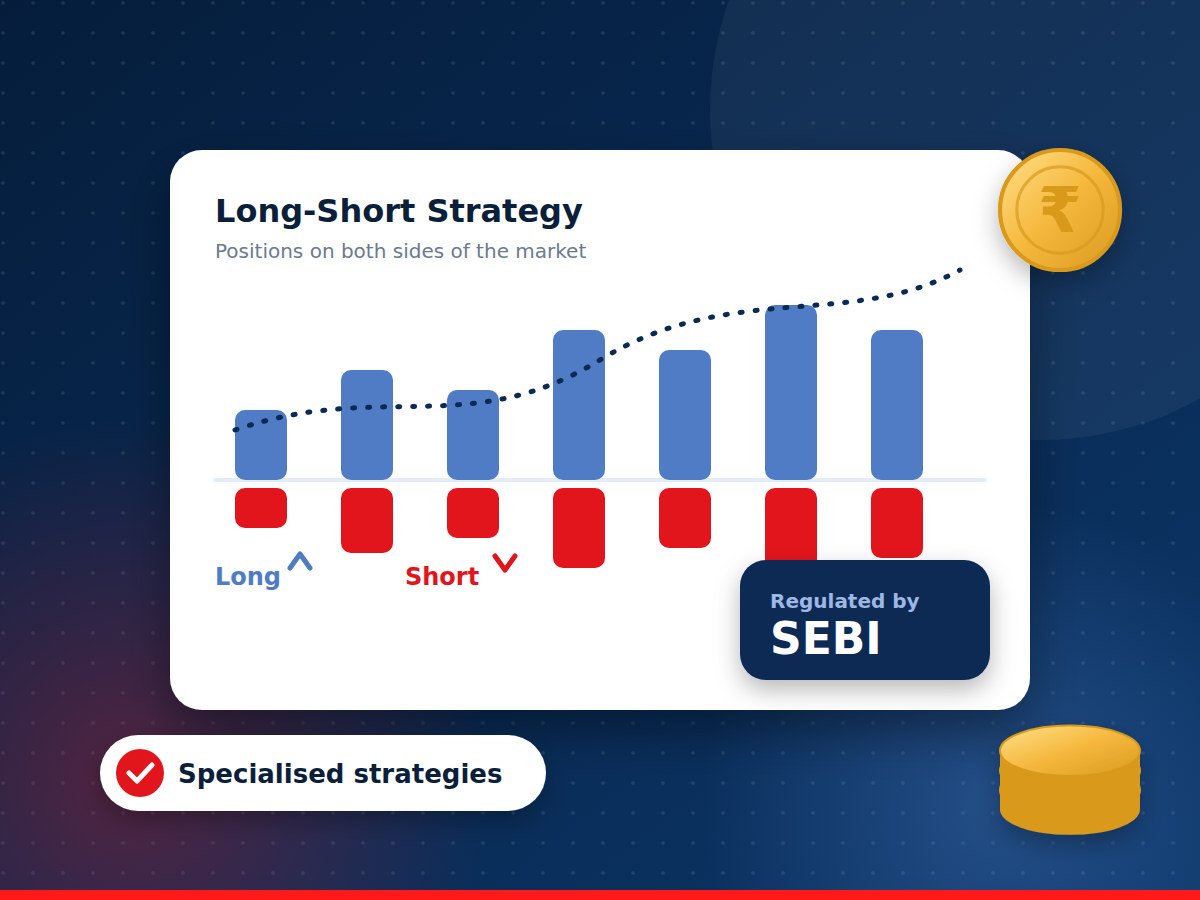
A SIF is managed by an AMC like a mutual fund, but its strategies can use tools such as limited short exposure through derivatives. That flexibility can help in some markets, and it also adds risk, which is why SEBI set a higher entry point.
Regulated, pooled structure
You hold units in a pooled fund under SEBI's mutual fund framework, with prescribed disclosures and governance.
Specialised strategies
Long-short, sector rotation and active asset allocation are examples of what SIFs can offer.
The Key Facts
Minimum investment
Counted at PAN level across all SIF strategies of one AMC. Accredited investors are exempt.
In force since
SEBI issued the framework on 27 February 2025 and it came into effect on 1 April 2025.
Unhedged short exposure
Strategies can take short positions through derivatives, up to 25% of net assets.
Regulated
SIFs run under the SEBI (Mutual Funds) Regulations, offered by AMCs under a separate SIF brand.
SIF vs Mutual Fund, PMS and AIF
Where a SIF sits among the regulated options.
| Feature | Mutual fund | SIF | PMS | AIF |
|---|---|---|---|---|
| Minimum investment | Low, with SIPs from a few hundred rupees | ₹10 lakh (PAN level, per AMC) | ₹50 lakh | ₹1 crore for most investors |
| Structure | Pooled units | Pooled units, under the mutual fund framework | Securities held in your name | Pooled units |
| Short positions | Generally not used | Up to 25% unhedged through derivatives | Permitted | Allowed in some categories |
| Regulation | SEBI (Mutual Funds) | SEBI (Mutual Funds) | SEBI (PMS) | SEBI (AIF) |
| Usually suits | Most investors | Investors who can take more risk and understand derivatives | Larger portfolios wanting customised management | High-net-worth investors |
A simplified comparison. Details vary by product, and rules can change.
The Strategies SEBI Allows
SEBI defined these strategy types at launch. Each AMC decides which to offer, and each strategy's documents list its exact limits and risk level.
Equity Long-Short
Invests at least 80% in equity and equity-related instruments and may take short positions through derivatives, up to 25% of net assets.
Equity Ex-Top 100 Long-Short
Focuses at least 65% on stocks outside the top 100 by market capitalisation, with long-short positions.
Sector Rotation Long-Short
Invests at least 80% in equity across up to four sectors at a time and rotates between sectors, with long-short positions.
Debt Long-Short
Invests in debt instruments and may use derivatives to take long and short views, within SEBI limits.
Sectoral Debt Long-Short
Invests in debt instruments of at least two sectors, with no more than 75% in any one sector, using long-short positions.
Hybrid Long-Short
Holds at least 25% each in equity and debt, with long-short positions across them.
Active Asset Allocator Long-Short
Shifts actively between equity, debt and other asset classes, with long-short positions.
Who May Consider a SIF
A SIF is not meant for everyone. It may be worth discussing if:
- You can commit at least ₹10 lakh for the long term
- You already hold a core portfolio of mutual funds or other investments
- You understand that derivatives and short positions add risk as well as flexibility
- You are comfortable with higher volatility and returns that may differ from the market
- You want a regulated strategy but find the PMS minimum too high
Risks and Points to Check
- Short exposure and derivatives can lose money if markets move against the fund
- Results depend heavily on the fund manager. Nothing is guaranteed
- Redemption terms differ by strategy: open-ended, interval or closed-ended
- Strategies are new, so track records are short
- Costs and tax treatment depend on the strategy, so compare them before investing
From First Question to Regular Reviews
Check the fit
We look at your goals, your existing portfolio and how much risk you can take before suggesting a SIF.
Compare strategies
We explain each strategy, its limits and risk level, and the AMC's team and approach.
Complete KYC and invest
You invest at least ₹10 lakh across the AMC's SIF strategies. SIP, SWP and STP are available with some AMCs above the minimum.
Review every year
We check whether the strategy still fits your goals and your wider portfolio.
SIF FAQs
What is a Specialized Investment Fund (SIF)?
A SIF is a SEBI-regulated investment category that sits between mutual funds and portfolio management services (PMS). It is run by a mutual fund AMC under a separate SIF brand and allows more flexible strategies, such as long-short positions through derivatives, for investors who can invest at least Rs 10 lakh.
What is the minimum investment in a SIF?
The minimum is Rs 10 lakh per investor, counted at PAN level across all SIF strategies of one AMC. Accredited investors are exempt from this minimum. You do not need to invest Rs 10 lakh in each strategy, but your total across that AMC's SIF strategies must stay at or above the threshold.
How is a SIF different from a mutual fund, PMS and AIF?
A SIF pools money like a mutual fund but can use strategies that conventional mutual funds cannot, including limited unhedged short exposure through derivatives. PMS needs a higher minimum (Rs 50 lakh) and holds securities in your name, while most AIFs need Rs 1 crore. SIF fills the space between them.
Can I invest in a SIF through a SIP?
Some AMCs offer SIP, SWP and STP facilities in their SIF strategies, as long as the Rs 10 lakh minimum per PAN is maintained. The facilities differ by AMC and strategy, so check the strategy's documents or ask us.
Are SIFs safe?
No investment is risk-free. SIFs can use derivatives and short positions, so they can be more volatile than conventional mutual funds, and returns are not guaranteed. SEBI sets limits on exposure, and each strategy discloses its risk level, but you should understand the strategy before investing.
How are SIF returns taxed?
SIFs are generally taxed in line with mutual funds, depending on the asset mix of the strategy and how long you hold the units. Tax rules change from time to time, so please check the current position with a tax professional.
Who can invest in a SIF?
Resident individuals, HUFs, companies, trusts and other eligible investors who meet the Rs 10 lakh minimum, or who qualify as accredited investors. Eligibility for NRIs can depend on the AMC and applicable regulations, so please check with us.
You May Also Need
Wondering if a SIF Fits Your Portfolio?
Speak to a VR Capittal advisor for a free conversation about your goals and where a SIF could, or could not, fit.
Disclaimer: Investments in Specialized Investment Funds are subject to market risks, including risks from the use of derivatives and short positions. Read all scheme-related and strategy-related documents carefully. Past performance is not indicative of future returns. SIFs can be distributed only by AMFI-registered SIF distributors. This page is for general information and is not personalised advice or a recommendation of any strategy. VR Capittal is an AMFI-registered mutual fund distributor (ARN - 251873).